
Why Understanding the Different Types of Locs Matters Before You Start
Before you commit to your loc journey, there is one question that deserves far more attention than it typically receives: which type of locs is right for you? It is a question I ask every client who walks through our doors at Shea Perfection, and the answer shapes everything — from how we install, how we maintain, and how we style your locs for years to come.
The term “locs” covers an entire spectrum of techniques, sizes, starting methods, and philosophies. Traditional locs, microlocs, Sisterlocks, and freeform locs are not simply different names for the same thing. Each has a distinct installation process, a different maintenance rhythm, a unique aesthetic, and a different relationship with your budget and lifestyle. Choosing incorrectly — or starting without understanding what you are choosing — is one of the most common reasons clients end up disappointed with their results, or worse, having to start over entirely.
At Shea Perfection, we have worked with hundreds of clients across Accra and beyond, helping them begin and maintain every type of loc imaginable. This guide draws directly from that hands-on experience. Whether you are completely new to locs or reconsidering a past decision, understanding the full landscape will help you make a confident, informed choice.
Traditional Locs: The Foundation of Every Loc Journey
What Are Traditional Locs?
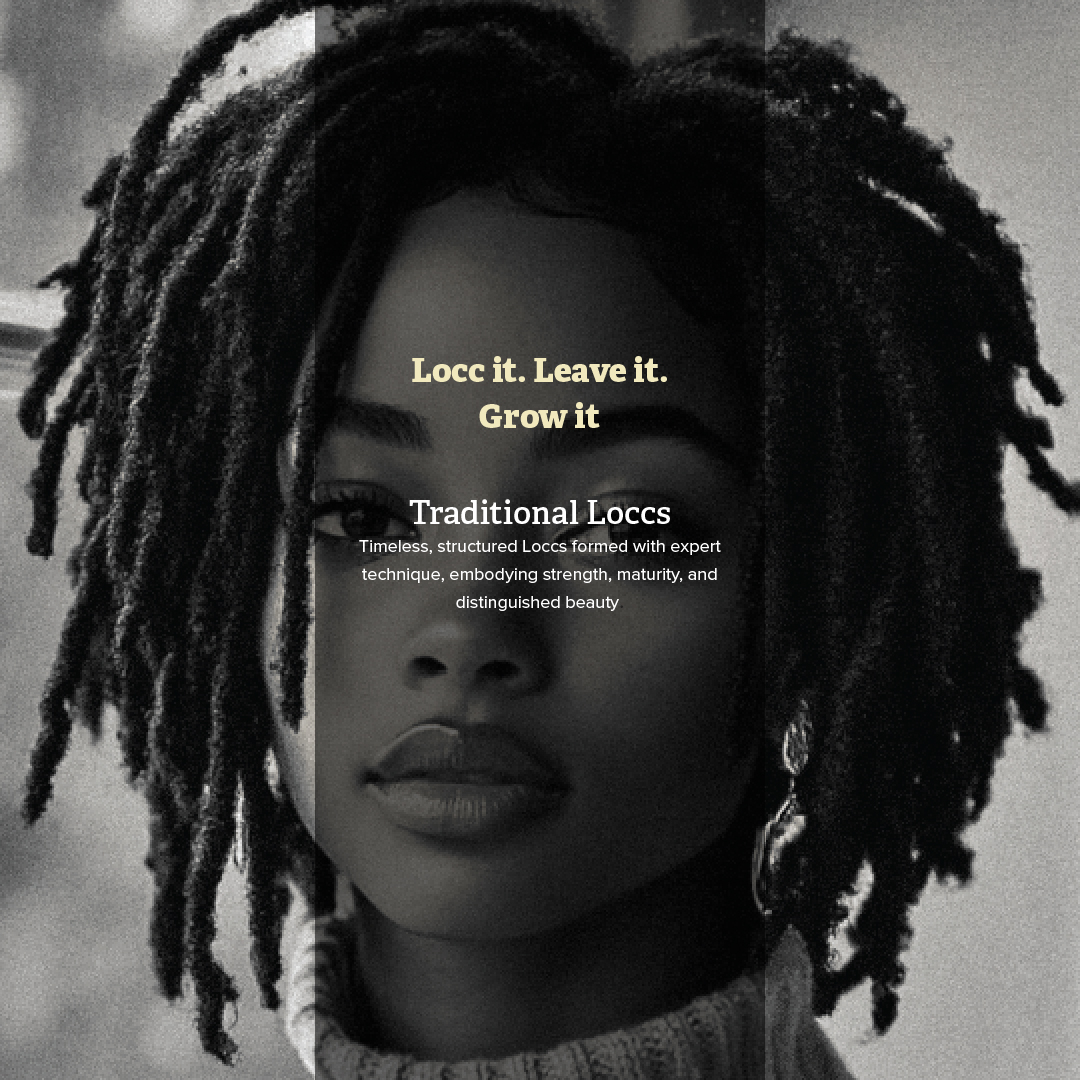
Traditional locs — sometimes called classic locs or regular locs — are the original and most widely recognised form of locs. They are formed by allowing the hair to matt and intertwine over time into permanent cylindrical or flattened sections. They can range from pencil-thin to finger-width, and they carry a long history across African, Caribbean, and Rastafarian cultures.
Traditional locs are defined by their organic maturation process. Unlike Sisterlocks, which use a patented grid system, or microlocs, which rely on very precise sectioning, traditional locs give you considerable flexibility in size and starting method. The end result — after the starter, budding, teenage, and mature stages — is a full, rope-like loc that has enormous versatility for styling.
Starting Methods for Traditional Locs
There are several ways to begin traditional locs, and the best method depends on your hair texture, current length, and desired final appearance:
- Two-strand twists: The most popular starting method in Ghana and across West Africa. The hair is divided into sections and twisted around itself in two strands. Over time, the twists begin to matt and intertwine. They tend to give locs a slightly rounder profile and work beautifully on 4C hair.
- Palm rolling: Sections of hair are rolled between the palms using a loc gel or butter to encourage the hair to coil on itself. It is a classic method that produces clean, uniform starter locs.
- Comb coils: A fine-tooth comb is used to coil small sections of hair at the root. This method creates very neat, defined starter locs and is particularly effective on shorter hair.
- Braiding: Sections are braided rather than twisted. As the hair grows and matts, the braid structure gives way to a true loc. Braided starters tend to produce flatter, more ribbon-like locs.
- Interlocking: A tool is used to pull the new growth through the base of the loc, tightening the root without palm rolling. It is especially useful for fine or silky hair types that tend to unravel.
Size Options
Traditional locs can be installed in almost any size. Small traditional locs (similar to pencil width) offer more styling versatility. Medium locs are the most common choice. Large or chunky locs mature faster and require less maintenance time per session.
Maintenance Frequency
Most clients with traditional locs retwist or interlock every four to eight weeks, depending on hair growth rate, texture, and the level of neatness they prefer. Some clients extend their maintenance schedule significantly once their locs are mature.
Pros and Cons of Traditional Locs
Pros: Wide range of sizes and starting methods; well-understood by most locticians; lower initial installation cost; excellent versatility once mature; deeply rooted cultural history; suitable for nearly all hair types.
Cons: Require patience through the early stages (starter to budding can be an awkward period aesthetically); new growth can look unruly between maintenance appointments; palm rolling can lead to thinning at the roots if done too aggressively over the years.
Microlocs: Precision, Versatility, and Refined Detail
What Are Microlocs?
Microlocs are very small locs, typically ranging from 1mm to 6mm in diameter at installation. The term is sometimes used interchangeably with Sisterlocks, but they are not the same thing. Microlocs are a general term for any small-to-tiny loc that does not use the trademarked Sisterlocks method. They can be installed by any trained loctician, and they do not require certification.
The key distinction from traditional locs is scale. Because they are so fine, microlocs offer an extraordinary range of styling options. You can wear them straight, curly, in updos, in braided styles, or in loose flowing styles — all while maintaining your locs. They can look nearly indistinguishable from loose natural hair when styled, which is a significant appeal for clients who want loc benefits without a dramatic visual departure from their current look.
Installation Process
Microlocs are installed by sectioning the hair into a very precise grid pattern with extremely small parts. The most common starting methods are interlocking and comb coils. Because the sections are so small, installation is time-intensive — a full head can take anywhere from six to twelve hours for a trained loctician, and even longer for very thick or long hair.
At Shea Perfection, we use our professional Interlocking Tools to install and maintain microlocs with accuracy and consistency. The right tool is critical for such fine work — imprecise interlocking on small locs can cause thinning or breakage at the base.
Time and Cost
Microlocs carry a higher initial investment than traditional locs, both in money and chair time. Installation is priced higher due to the labour involved. Maintenance appointments, however, are often shorter per session relative to traditional locs once the client learns proper upkeep techniques. Over the long term, the cost tends to even out.
Maintenance for Microlocs
Microlocs typically require maintenance every four to six weeks. Because the locs are fine, the scalp and roots are more exposed, making a healthy scalp routine essential. We recommend our Hair and Scalp Oil to clients with microlocs — applied directly to the scalp between appointments, it nourishes the roots and prevents the dryness and flaking that fine sections can sometimes expose.
Pros and Cons of Microlocs
Pros: Exceptional styling versatility; lightweight; can mimic the look of loose natural hair; suitable for professional environments where very thick locs may not be; not limited to a certified consultant; can be installed by a skilled loctician.
Cons: High initial installation time and cost; greater risk of breakage if not installed and maintained properly; requires a skilled and experienced loctician; higher maintenance precision needed; not ideal for very short hair at installation.
Sisterlocks and Brotherlocks: The Trademarked System
What Are Sisterlocks?
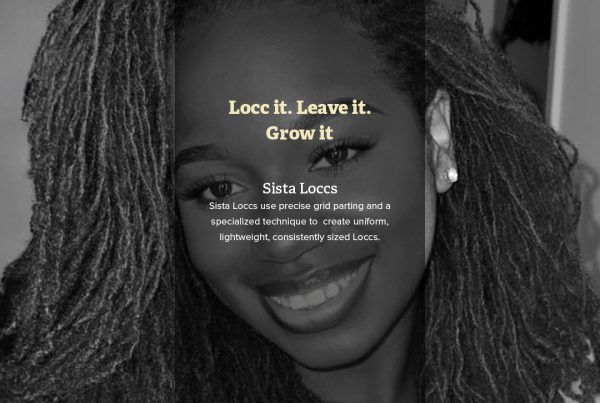
Sisterlocks is a trademarked loc system developed by Dr. JoAnne Cornwell in the United States in the 1990s. It is specifically designed for women (Brotherlocks is the male equivalent), and it uses a proprietary interlocking technique and a precise parting grid system that is unique to the brand.
Sisterlocks look similar to microlocs to an untrained eye, but they are a distinct system with specific tools, a specific grid pattern, and a specific interlocking method that cannot be legally replicated under the Sisterlocks name without certification. The philosophy behind Sisterlocks was to create a small loc system that allowed Black women to wear their natural hair in a way that offered maximum versatility — particularly in professional and social contexts where very traditional or bulky locs were sometimes met with resistance.
Certified Consultants
One of the most important things to understand about Sisterlocks is that they must be installed by a certified Sisterlocks consultant. Certification is obtained through the Sisterlocks company itself, through a structured training programme. This is not merely a marketing requirement — it matters practically, because the proprietary interlocking technique and parting grid are specific skills that take significant training to execute correctly.
If a loctician offers to install “Sisterlocks” without holding certification, what they are actually installing is microlocs. This is not necessarily a problem — but you should understand what you are getting. The results may be very similar, but the techniques differ.
The Interlocking Technique
Sisterlocks use an interlocking method that pulls the new growth through the loc in a rotational pattern using a specialised tool. This tightens the root and keeps the loc uniform without the need for any products. Sisterlocks are, in fact, a product-free system by design — no gels, butters, or waxes are used during installation or maintenance.
Cost and Maintenance
Sisterlocks are among the most expensive loc options available. Initial installation is priced at a premium due to the certification, the time involved (often twelve hours or more), and the specialised skill required. Retightening appointments are typically scheduled every four to six weeks and are performed by the same certified consultant, or another certified consultant, using the same interlocking method.
Because Sisterlocks use no products, scalp care becomes particularly important. Between appointments, keeping the scalp clean and nourished is essential for healthy loc development.
Pros and Cons of Sisterlocks/Brotherlocks
Pros: Highly consistent and precise results; excellent versatility; product-free system reduces build-up; can be restyled like loose natural hair; the certified consultant network provides a level of quality assurance; extremely lightweight.
Cons: Highest cost option; must be maintained by a certified consultant (limiting your choice of loctician); very long initial installation time; the certification network may not be as established in all parts of Africa as in North America; difficult to transition to another loc type without starting over.
Freeform Locs: The Organic, Liberating Path
What Are Freeform Locs?
Freeform locs — also called organic locs or neglect locs — are formed by allowing the hair to mat and loc entirely on its own, without any manipulation, sectioning, or styling during the formation process. The hair is simply washed, separated if needed to prevent large undesired merging, and left to loc at its own pace.
Freeform locs are, by their nature, unpredictable. No two sets of freeform locs look alike. The result is usually organic, textured, and visually distinctive — sections vary in size, some locs may merge at the roots, and the overall appearance is natural and unmanipulated. Many people find this aesthetic deeply meaningful, as it represents a completely non-interventionist relationship with their hair.
Semi-Freeform: A Middle Ground
Semi-freeform locs occupy the space between traditional and fully freeform. The hair is still allowed to loc naturally, but the loctician or the client periodically separates locs that are merging undesirably, and washes the hair on a consistent schedule. Retightening at the root is not typically performed, but some minimal guidance is given to the loc formation process.
For many clients in Accra who love the organic look but want some level of structural control, semi-freeform is an excellent compromise.
Maintenance for Freeform Locs
Freeform locs require the least active maintenance of any loc type. The primary tasks are washing regularly, separating merging sections when desired, and keeping the scalp healthy. A good Hair and Scalp Oil is just as important here — in fact, because freeform locs are not being regularly retwisted or interlocked, the scalp can be more prone to dryness and product build-up if not properly cared for.
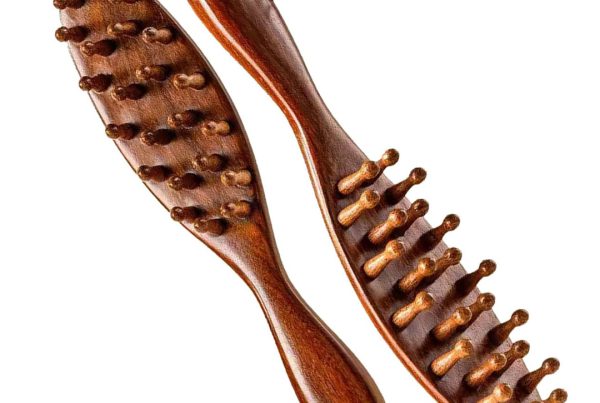
When washing freeform locs, particularly in the early stages, a Locc Care Hair Brush is invaluable for gently cleansing the scalp without disturbing the loc formation underway.
Pros and Cons of Freeform Locs
Pros: Lowest maintenance commitment; no professional appointments required during formation; completely unique, individual result; a deeply personal and often spiritually significant process for many clients; no product requirements; no tool requirements during formation.
Cons: Highly unpredictable in terms of final appearance; size and shape cannot be controlled; some people find the “teenage” phase aesthetically challenging; not suitable for people who desire a uniform, neat appearance; can be more difficult to style in corporate or formal environments.
Comparison of All Four Loc Types
| Feature | Traditional Locs | Microlocs | Sisterlocks | Freeform Locs |
|---|---|---|---|---|
| Loc Size | Small to large (flexible) | Very small (1–6mm) | Very small (trademarked grid) | Variable and unpredictable |
| Starting Method | Two-strand twist, palm roll, comb coils, braids | Interlocking, comb coils | Proprietary interlocking (certified) | Natural matting / neglect |
| Installation Time | 2–8 hours | 6–14 hours | 12–20+ hours | None (self-forming) |
| Cost Range | Moderate | Moderate to high | High to very high | Very low to none |
| Maintenance Frequency | Every 4–8 weeks | Every 4–6 weeks | Every 4–6 weeks | Minimal (washing, separating) |
| Styling Versatility | High (when mature) | Very high | Very high | Low to moderate |
| DIY-Friendly | Partially | Not recommended | No (requires certification) | Yes |
How to Choose the Right Type of Locs for You
Choosing the right type of locs is not simply about aesthetics. It requires an honest assessment of several key factors:
Your Hair Type and Texture
4C hair — the most common texture across Ghana and West Africa — is naturally well-suited to all loc types. The tight coil pattern helps hair matt and loc relatively quickly. Palm rolling and two-strand twists work exceptionally well on 4C hair for traditional locs. For microlocs and Sisterlocks, 4C hair holds the tiny sections well, though the initial formation may take longer than it would on looser textures.
If you have finer or looser hair (types 3A–3C), interlocking is often recommended as a starting method because the hair is more prone to unravelling. Traditional palm-rolled locs can struggle to hold on fine hair without consistent upkeep.
Your Lifestyle and Career
Consider how your workplace or social environment relates to your hair. If you work in a formal corporate environment or a profession where uniformity and neatness are expected, microlocs or Sisterlocks — with their fine, polished appearance and high styling versatility — are often the most practical choice. Traditional locs, once mature, are also very versatile. Freeform locs, while beautiful and meaningful, may not suit every professional context, particularly in Ghana’s more formal business culture.
Also consider your time availability. Freeform locs require the least appointment time. Sisterlocks and microlocs require the most precise, regular maintenance. If your schedule is unpredictable and you cannot commit to appointments every four to six weeks, traditional locs or freeform may be a better fit.
Your Budget
Be realistic about what you can sustain. The initial installation is only part of the cost — ongoing maintenance over years is where the real investment accumulates. Sisterlocks and microlocs carry higher long-term costs. Traditional locs are more affordable and accessible. Freeform locs require minimal financial investment but demand patience and comfort with the unpredictable.
Your Desired Look
Spend time looking at mature examples of each loc type — not just freshly installed starters, but locs that are two, five, or even ten years old. The starter phase never looks like the mature phase. Understanding what you are working towards is essential for maintaining motivation through the early stages.
If you are unsure, book a consultation with our team at Shea Perfection before committing. Book a service and we will assess your hair, discuss your lifestyle, and recommend the loc type best suited to your specific situation.
Starting Methods Explained in Detail
Regardless of which type of locs you choose, the starting method has a significant impact on the final result. Here is a closer look at the most commonly used techniques:
Two-Strand Twists
The hair is divided into sections and two strands are twisted around each other from root to tip. This is the most widely used starting method in Ghana and across natural hair communities. Two-strand twists offer a clean, defined starter loc and transition well into mature locs, particularly on 4C hair. Using a Locc Comb to part and section the hair before twisting ensures clean, even sections and a neat final appearance.
Comb Coils
A fine-tooth comb is used to coil small sections of hair from root to tip. This method works best on shorter hair and produces very neat, defined coils that eventually loc as the hair grows. Comb coils are popular for clients starting their loc journey with close-cropped or medium-length hair.
Interlocking
Interlocking uses a tool to pull the loc through its own base in a rotating pattern, locking the new growth in place. This method does not rely on product to keep locs neat, making it an excellent option for fine or silky hair that tends to unravel. It is the preferred method for microlocs, Sisterlocks, and clients who prefer not to retwist. Our professional-grade Interlocking Tools are designed for both loctician and client use, enabling precise, consistent interlocking without damaging the hair shaft.
Backcombing
Sections of hair are backcombed (teased) towards the root to create immediate matting. This method is more common in European and South Asian loc traditions than in African ones, but it is occasionally used for certain aesthetics or textures. It is less suitable for 4C hair, which locs naturally without the need for backcombing.
Braiding
Instead of twisting, sections of hair are braided. Over time, the braid structure gives way to a true loc. Braided starters tend to produce flatter, wider locs. Some clients prefer this method for the added security during the starter phase, particularly on longer hair.
Frequently Asked Questions
Can I switch between loc types after starting?
In most cases, transitioning between loc types is not possible without starting over. Once a loc has formed and matured, the internal structure is set. You cannot convert traditional locs to Sisterlocks or freeform locs to microlocs without cutting and beginning again. The only exception is palm-rolled starters that have not yet matted — in very early stages, you may be able to adjust the starting method. This is why choosing the right type at the outset is so important. If you are uncertain, consult a professional before installing.
How long does installation take for each type?
Traditional loc installation typically takes two to eight hours, depending on hair length, thickness, and the number of locs being installed. Microloc installation ranges from six to fourteen hours. Sisterlocks installation is the longest of any type, often running twelve to twenty hours or more, and is sometimes spread across multiple sessions. Freeform locs require no formal installation — the formation process happens naturally over weeks and months.
Which type of locs is best for 4C hair?
All four types of locs work well on 4C hair, but traditional locs and microlocs are particularly popular and effective. 4C hair’s tight coil pattern encourages rapid matting, which makes it excellent for loc formation. Two-strand twists and comb coils are the starting methods that work best for this hair type. Many locticians consider 4C hair ideal for loc journeys of any kind precisely because it holds sections cleanly and locs with less unravelling than looser textures.
Which type of locs is the most affordable?
Freeform locs have the lowest financial cost, as they require no professional installation and minimal ongoing maintenance. Among professionally installed loc types, traditional locs are the most affordable at installation. The cost of ongoing maintenance for traditional locs is also typically lower than for microlocs or Sisterlocks, as retwisting is a widely available service. Sisterlocks are the most expensive option, both for installation and for ongoing maintenance with a certified consultant.
Can I start my loc journey at home?
Yes and no — it depends on the type. Freeform locs are entirely self-starting and require no professional involvement. Traditional locs can be started at home using two-strand twists or palm rolling if you have some experience with natural hair care, though professional installation typically produces cleaner, more consistent results. Microlocs are not recommended as a DIY project due to the precision required for the tiny sections. Sisterlocks must be installed by a certified consultant and cannot be done at home. If you do decide to start or maintain your locs at home, quality tools matter enormously — using a proper Locc Comb, a Locc Care Hair Brush, and appropriate Interlocking Tools will significantly improve your results and protect your hair health.
How long does it take for locs to fully mature?
Full maturity typically occurs between eighteen months and three years, depending on the loc type, hair texture, starting method, and how consistently the hair is maintained. Traditional locs generally mature within eighteen to twenty-four months. Microlocs and Sisterlocks may take slightly longer due to their fine size. Freeform locs can vary enormously — some form and mature within a year, while others are still developing at three years. The maturation process moves through recognisable stages: starter, budding (or baby), teenage, and mature. Each stage has its own characteristics, and each brings you closer to the full, defined locs you are working towards.
Begin Your Loc Journey with Confidence
Every loc type described in this guide has produced genuinely beautiful, healthy, and long-lasting results for our clients at Shea Perfection. The right choice is not the most popular one or the one you see most often on social media — it is the one that fits your hair, your lifestyle, your budget, and your vision for yourself.
Take the time to understand what each type involves before you sit in the chair. Ask your loctician detailed questions. Look at real examples. And invest in quality products and tools from the very beginning — your locs will thank you years down the road when they are full, healthy, and thriving.
If you are ready to start or you have questions about which type is right for you, our team in Accra is here to help. Book a service with Shea Perfection and let us guide you through every step of your loc journey.