
The Question Every Shea Butter Shopper Asks
Walk into any beauty supply store or scroll through an online shop selling shea butter products, and you will quickly encounter two options: refined and unrefined. The labels sound simple enough, but the difference between them goes far deeper than colour or smell. It touches on processing methods, nutritional integrity, and ultimately, what your skin and hair actually receive.
As someone who has worked with Ghanaian shea butter for years — sourcing it directly from producers in the north, watching it travel from the shea tree to the final product — I can tell you that this question matters more than most people realise. Choosing the wrong type for your needs is not the end of the world, but understanding what you are buying will help you make a far more informed decision.
In this guide, we will break down exactly what separates refined from unrefined shea butter, walk you through the traditional Ghanaian extraction process, compare them side by side, and help you decide which is right for your routine.
How Shea Butter Is Made: The Traditional Ghanaian Method
Shea butter comes from the nut of the Vitellaria paradoxa tree — the shea tree — which grows across the West African savannah belt. Ghana sits at the heart of shea country, and the Brong-Ahafo, Northern, Upper East, and Upper West regions have been producing shea butter for centuries.
The traditional extraction process is labour-intensive and almost entirely manual. It begins with collecting the shea fruit, which falls naturally from the tree during the rainy season. The outer pulp is removed, and the nuts are boiled, then sun-dried to halt germination. Once dried, the nuts are cracked open to reveal the kernels inside.
From there, the kernels are roasted — carefully, to avoid scorching — then ground into a paste using a stone mill or mechanical grinder. The paste is then kneaded by hand with water added gradually. This kneading separates the fat from the rest of the material. The fat rises to the surface, is skimmed off, and then boiled in large pots to remove remaining water. As it cools, it solidifies into the ivory or yellow butter we recognise.
This method, still practised by women’s cooperatives across northern Ghana, produces what we call raw or unrefined shea butter. Nothing is added, and nothing beyond physical separation is removed. The result is a product that retains the full spectrum of naturally occurring compounds the shea nut contains.
What Is Unrefined Shea Butter?
Unrefined shea butter — also called raw shea butter — is shea butter in its most natural state. After extraction, it undergoes no chemical treatment, bleaching, or deodorisation. The only processing it may see is filtering to remove physical impurities like shell fragments.
Appearance and Smell
Unrefined shea butter ranges in colour from off-white and pale yellow to a deep golden or even green-tinged yellow, depending on the region and season of harvest. This natural variation is perfectly normal and actually a good sign — it indicates that the butter has not been bleached.
The smell is distinctive: nutty, earthy, and slightly smoky from the roasting process. Some people love it immediately; others find it takes getting used to. For those accustomed to fragrance-free natural products, it quickly becomes familiar and even reassuring.
Texture
At room temperature, unrefined shea butter is solid but yielding — it melts easily against warm skin. The texture can be slightly grainy at times, which is entirely natural and does not indicate spoilage. This graininess is caused by the different fatty acids in the butter crystallising at slightly different temperatures and can be resolved by gently melting and re-cooling the butter.
Nutrient Content
This is where unrefined shea butter truly stands apart. The raw butter is rich in:
- Vitamins A, E, and F — antioxidants that protect skin from oxidative stress and support cell regeneration
- Triterpene alcohols — anti-inflammatory compounds unique to shea butter, including lupeol, butyrospermol, and parkseol
- Oleic acid (Omega-9) — a monounsaturated fatty acid that deeply moisturises and supports the skin barrier
- Stearic acid — provides richness and helps the skin retain moisture
- Linoleic acid (Omega-6) — essential fatty acid that can help reduce inflammation and improve skin texture
- Cinnamic acid esters — compounds with a natural, low-level UV-filtering effect
- Phytosterols — plant sterols that support skin barrier repair
The combination of these compounds gives unrefined shea butter its well-documented benefits: deep moisturisation, anti-inflammatory action, support for eczema and psoriasis, scar healing, hair nourishment, and scalp care. These benefits are not marketing language — they are backed by decades of use across West Africa and a growing body of dermatological research.
What Is Refined Shea Butter?
Refined shea butter starts from the same raw material but undergoes significant industrial processing before it reaches you. The refining process typically involves:
- Solvent extraction — hexane or similar solvents are used to maximise yield from the kernels
- Bleaching — activated charcoal or clay is used to remove the natural colour, producing a stark white butter
- Deodorisation — steam distillation or chemical processes remove the natural scent
- Hydrogenation — in some cases, the butter is partially hydrogenated to extend shelf life and alter texture
The result is a white, odourless, smooth butter that is visually appealing and easy to incorporate into cosmetic formulations. It blends well, takes on added fragrances without competition, and has a consistent appearance that consumers often associate with purity.
What Gets Removed
Here is the critical issue: the refining process strips out many of the biologically active compounds that make shea butter therapeutically valuable. The triterpene alcohols, a significant portion of the vitamins, many of the antioxidants, and the cinnamic acid esters are substantially reduced or eliminated. What remains is primarily the fatty acid profile — the moisturising base — without the full therapeutic payload.
When Refined Shea Butter Is Useful
Refined shea butter is not without purpose. It is widely used in commercial cosmetics where a neutral base is needed, where the natural scent would conflict with added fragrances, or where a product’s appearance requires a white or neutral colour. It is also useful for people with highly sensitive skin who react to the aromatic compounds in unrefined butter. In these specific contexts, refined shea butter serves a legitimate role.
Side-by-Side Comparison
| Feature | Unrefined Shea Butter | Refined Shea Butter |
|---|---|---|
| Colour | Ivory, yellow, or golden (natural variation) | Bright white (bleached) |
| Smell | Earthy, nutty, smoky | Odourless |
| Texture | Solid, can be slightly grainy; melts on skin | Smooth, consistent, creamy |
| Vitamins (A, E, F) | Fully retained | Largely removed |
| Triterpene alcohols | Present (anti-inflammatory) | Substantially reduced or absent |
| Fatty acid profile | Intact | Largely intact |
| Antioxidants | High | Low to negligible |
| Shelf life | 12–24 months (properly stored) | Up to 24+ months |
| Processing chemicals | None | Hexane, bleaching agents, deodorisers |
| Best uses | Skincare, hair care, therapeutic applications | Neutral cosmetic bases, fragrance formulations |
| Suitable for sensitive skin | Yes, for most (patch test advised) | Yes, especially for those reactive to aromatic compounds |
Understanding the Shea Butter Grading System
Not all shea butter is equal even within the unrefined category. The American Shea Butter Institute and various industry bodies recognise a grading system from A through F, and understanding it helps you evaluate what you are buying.
- Grade A — Raw, unrefined shea butter. Extracted using traditional or cold-press methods with water. The highest quality grade, retaining the full complement of nutrients and biologically active compounds. This is the gold standard for therapeutic and cosmetic use.
- Grade B — Refined shea butter. Bleached and deodorised, as described above. Nutritional value significantly reduced.
- Grade C — Highly refined, extracted using solvents such as hexane. Lower nutrient profile, often used in mass-market cosmetics.
- Grade D — The lowest quality uncontaminated grade. May contain impurities and has limited cosmetic or therapeutic value.
- Grade E — Contaminated shea butter. Contains impurities and is unsuitable for cosmetic or food use.
- Grade F — Shea butter mixed with other oils or adulterants. Not pure shea butter and should not be sold as such.
When sourcing shea butter or shea-based products, Grade A is what you want for skin and hair care. Unfortunately, grading is not always clearly communicated on product labels, which is why sourcing from a trusted, transparent supplier matters enormously.
Which Should You Choose?
The honest answer is: it depends on what you need, but for most people seeking genuine skin and hair benefits, unrefined shea butter is the superior choice.
Choose Unrefined Shea Butter If:
- You want maximum therapeutic benefit — deep moisturisation, anti-inflammatory support, scar healing
- You are managing a skin condition such as eczema, psoriasis, or extreme dryness
- You are using it for hair care — sealing moisture, soothing a dry scalp, defining natural curl patterns
- You prefer a product with no chemical processing or synthetic additives
- You are purchasing for a child or infant — the gentleness and purity of unrefined shea butter make it well suited to delicate skin
- You want to support traditional Ghanaian production methods and fair trade sourcing
Refined Shea Butter May Be Preferable If:
- You are formulating a cosmetic product that requires a fragrance-neutral, white base
- You have a documented sensitivity to the aromatic compounds in unrefined shea butter
- You are blending shea butter into a product where the natural scent would be incompatible
For everyday use — body moisturising, face care, hair masking, scalp treatment — unrefined Grade A shea butter delivers benefits that refined shea butter simply cannot match. The processing that makes refined butter visually uniform and scentless is precisely what removes the compounds responsible for its therapeutic reputation.
Why Shea Perfection Uses Unrefined Shea Butter
At Shea Perfection, we have made a deliberate, unwavering choice to work exclusively with unrefined, Grade A shea butter sourced from Ghana. This is not simply a marketing position — it is a commitment rooted in our understanding of what the ingredient actually does, and our respect for the tradition behind it.
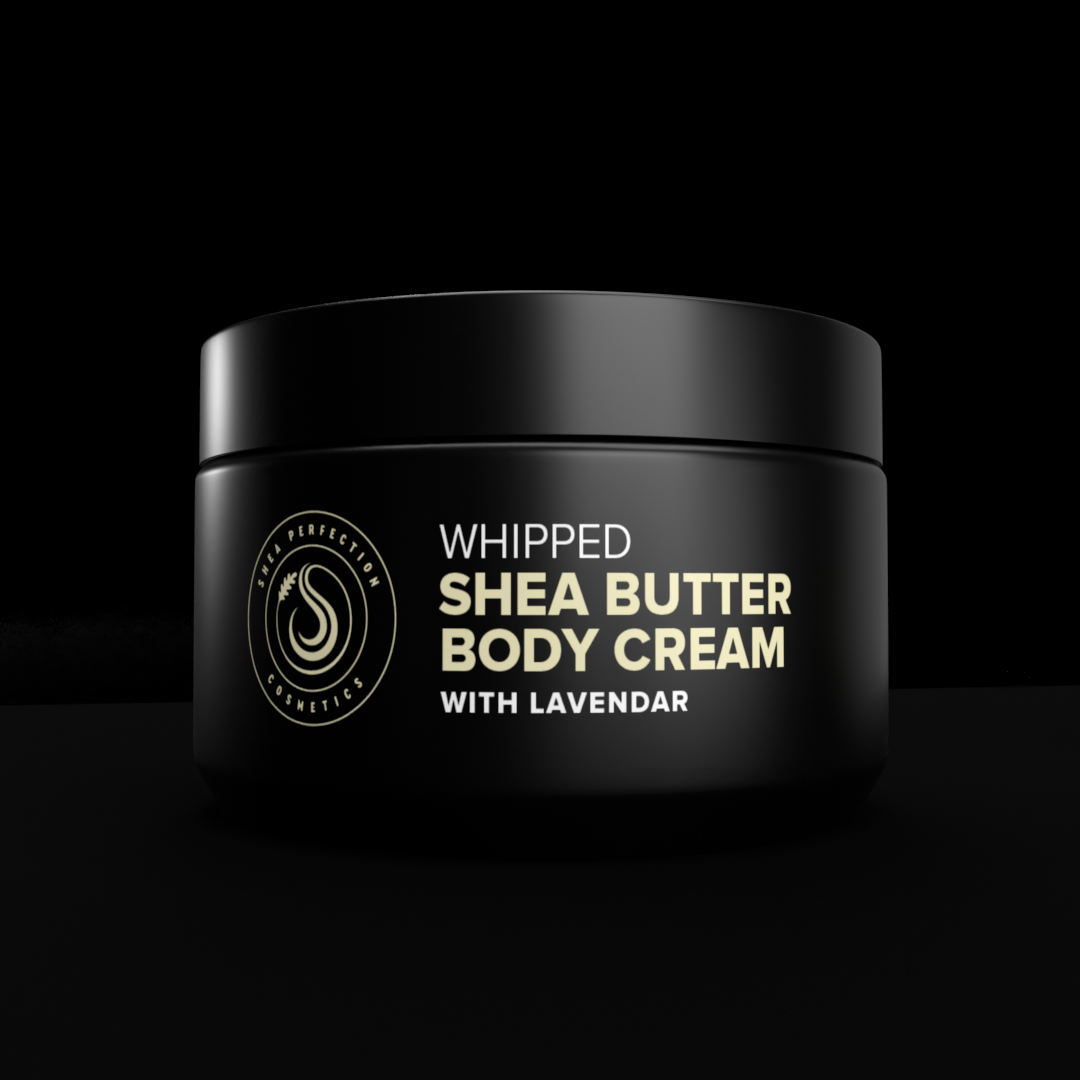
The women who produce our shea butter use methods passed down through generations. Their technique preserves what the shea tree gives naturally: a complex, bioactive fat that nourishes skin and hair in ways that industrial refinement cannot replicate. When we formulate products like our Shea Butter Body Cream with Lemongrass, the unrefined shea butter is not just a carrier — it is the active ingredient, working alongside complementary botanicals to deliver results you can feel.
We believe that when you apply a shea butter product, you deserve the full benefit of what the nut contains. That means vitamins, antioxidants, triterpenes, and fatty acids — not a stripped-down base that carries a famous name without the substance behind it.
Our approach also reflects a broader commitment: to support Ghanaian producers fairly, to celebrate traditional knowledge, and to offer products that are honest about what they contain and why. If you would like to explore our full range of unrefined shea butter products, visit our shop and see how we bring Grade A Ghanaian shea butter to your routine.
Frequently Asked Questions
Is unrefined shea butter safe for the face?
Yes, for most skin types. Unrefined shea butter has a comedogenic rating of 0–2, which means it is unlikely to clog pores for the majority of people. Its anti-inflammatory compounds can actually help calm acne-prone or reactive skin. As with any new product, a patch test on your inner arm before applying to your face is a sensible precaution.
Why does my unrefined shea butter smell so strong?
The earthy, nutty scent of unrefined shea butter comes from naturally occurring aromatic compounds and the roasting step in traditional extraction. The strength of the smell can vary between batches and origins. It fades somewhat once applied to skin, and in blended products like creams, it is balanced by other ingredients. If the smell bothers you, look for formulations where the shea butter is combined with complementary botanical oils or natural fragrance — the therapeutic properties remain intact.
How should I store unrefined shea butter?
Store it in a cool, dark place — a cupboard away from direct sunlight is ideal. Avoid exposing it to repeated temperature fluctuations, which can cause the butter to develop a grainy texture as the fatty acids recrystallise. Properly stored, high-quality unrefined shea butter will last 12 to 24 months. There is no need to refrigerate it unless your environment is consistently very warm.
Does the colour of shea butter affect its quality?
Not in the way many people assume. Colour variation in unrefined shea butter — from pale ivory to golden yellow — is normal and reflects differences in the shea tree variety, the growing region, the season, and the extraction method. A deep yellow colour is not inferior to a pale ivory; both can be Grade A quality. What you should be cautious of is a stark, bright white colour, which typically indicates bleaching and therefore refining. When it comes to unrefined shea butter, natural colour variation is a feature, not a flaw.